

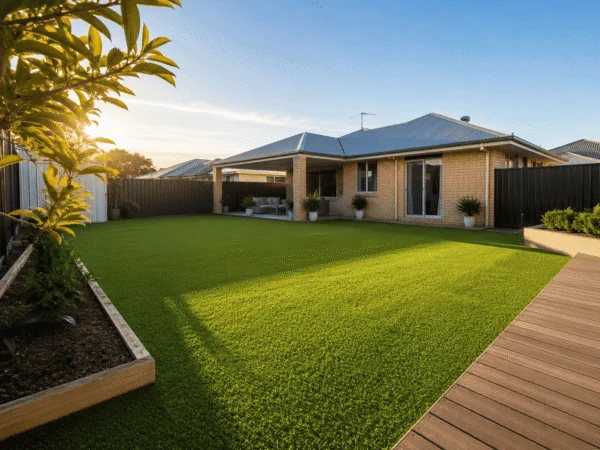
Weeds on artificial grass are more common than most homeowners expect and the good news is you can absolutely use weed killer to deal with them safely. Whether you’re spotting dandelions pushing through drainage holes, clover creeping in from the edges, or grass threading up through the backing, this guide covers everything Perth homeowners need to know.
We’ll walk you through the best weed killers for synthetic turf in Australia, pet-safe options, step-by-step removal methods, natural DIY remedies, and the right way to prevent weeds from coming back.
Can Weeds Really Grow Through Artificial Grass?
Artificial grass is far more resistant to weeds than natural lawn, but it isn’t completely weed-proof. If you’re seeing growth on or through your synthetic turf, you’re not alone and it doesn’t mean your installation has failed.
Weeds don’t grow up from the soil through the turf backing the way many people assume. The dense synthetic backing, combined with a quality weed membrane installed beneath the turf, blocks almost all below-ground growth. What you’re typically dealing with are surface weeds: seeds carried by wind, birds, or foot traffic that land on the turf and germinate in accumulated organic debris things like leaf matter, dust, and pet fur that settle between the blades over time.
The 4 Most Common Entry Points for Weeds
Understanding where weeds enter helps you target your treatment:
- Drainage holes: Artificial grass has small perforations in the backing to allow water to drain. In lawns with very fertile soil beneath, occasional weeds can push up through these holes. This is more common in older installations or where the sub-base was not properly prepared.
- Seams and joins: Any joins between two sections of turf can create a gap if not glued or fastened properly. Weeds from the soil below can exploit these gaps over time.
- Edges and perimeters: The most common entry point. Weeds from surrounding garden beds, paths, or lawn areas creep horizontally under the edging. This is especially common where the turf borders garden beds.
- The turf surface itself: Airborne seeds land on the turf, find organic debris between the blades, and germinate. These surface weeds are the easiest to treat and the most common complaint from Perth homeowners.
Best Weed Killer for Artificial Grass in Australia
Not all weed killers are suitable for synthetic turf. Some chemical formulations can degrade the turf backing, stain the fibres, or leave harmful residue where children and pets play. Here’s what works and what to avoid.
Glyphosate-Based Weed Killers (Roundup, Zero)
Glyphosate-based products are widely considered the most effective and safest option for artificial grass. Glyphosate kills weeds at the root without damaging synthetic fibres or the turf backing. It breaks down in soil fairly quickly and won’t cause staining or residue on the grass blades.
Pet-Safe & Organic Weed Killers
If you have dogs, cats, or young children using your artificial lawn, choose a certified organic or acetic acid-based formula. These products break down quickly, leave no harmful residue, and are safe once dry.
Pre-Emergent Herbicides: Stop Weeds Before They Start
Pre-emergent herbicides work differently to standard weed killers; they don’t kill existing weeds, but they prevent weed seeds from germinating. Applied to the turf surface and around the edges, they create an invisible barrier that stops new weeds before they appear.
How to Get Rid of Weeds in Artificial Grass: Step-by-Step
Whether you’re dealing with a handful of surface weeds or a border that’s being invaded from the garden bed next to it, follow this three-step approach.
Step 1 – Manual Removal
For isolated weeds, hand removal is the quickest and most precise method. Put on gardening gloves and grip the weed as close to the base as possible. Pull firmly and steadily you want to extract the root, not just snap the stem, otherwise it will regrow.
For weeds that have established deeper roots (common along edges and through drainage holes), use a narrow tool to help a screwdriver, golf tee, or a purpose-made weed puller works well. Work the tool down alongside the root and lever it out.
Tip: Weeds are easiest to remove after rain or after watering, when the sub-base is slightly softened.
Step 2 – Apply a Weed Killer Spray
Once you’ve removed the bulk of the weed by hand, apply a targeted weed killer spray to the root zone to prevent regrowth. Choose a product appropriate for your household (glyphosate or pet-safe organic see the section above).
Spot-treat only you don’t need to blanket-spray the whole lawn. Aim the nozzle at the base of the weed and apply enough to wet the root zone without runoff.
Step 3 – Treat Edges and Seams
Edges are the highest-maintenance area on any artificial grass installation. Every 4–6 weeks, inspect the full perimeter of your lawn particularly where the turf meets garden beds and remove any encroaching growth. A targeted application of weed killer or pre-emergent spray along the edge line will dramatically reduce perimeter weed pressure over time.
For seam areas, check that the join is still bonded. If a seam has lifted and weeds are establishing beneath it, the seam may need to be re-glued by a professional before the weed problem can be permanently resolved.
Does Artificial Grass Prevent Weeds?
Yes, artificial grass dramatically reduces weed growth compared to natural lawn. Most Perth homeowners report going from constant weeding to rarely needing to do anything at all. But “dramatically reduces” is not the same as “eliminates,” and it’s worth being honest about why.
What artificial grass does well:
- The dense synthetic backing blocks sunlight from reaching the soil beneath, preventing germination below the surface
- A properly installed weed membrane adds a second barrier between the soil and the drainage base
- Without soil on the surface, most weed seeds that land on the turf have nowhere to establish
What artificial grass can’t fully prevent:
- Organic debris (leaves, soil dust, pet waste) accumulates over time between the grass blades, creating a thin surface layer that weed seeds can germinate in
- Edges and perimeters are always vulnerable to horizontal encroachment from surrounding garden areas
- Drainage holes, though small, are a potential entry point in yards with particularly fertile or clay-heavy soil
The bottom line: With a proper installation (quality weed membrane, correct sub-base, sealed edges) and basic maintenance (brushing, leaf blowing, occasional inspection), weeds on artificial grass should be a minor nuisance rather than a major problem. If you’re spending significant time weeding your synthetic lawn, it’s worth having the installation reviewed.
How to Prevent Weeds Growing Through Artificial Grass
Prevention is significantly easier than treatment. The best weed management strategy starts before your artificial grass is even laid.
Use a Quality Weed Membrane During Installation
A weed membrane (also called a weed mat or weed barrier fabric) is a permeable geotextile layer that sits between your sub-base and the artificial turf. It allows water to drain freely while blocking both upward root growth and sunlight penetration into the soil.
Not all weed membranes are equal. A thin, cheap membrane will degrade within a few years, allowing weed roots to penetrate. A high-quality woven or non-woven geotextile membrane should last 10–15 years and is a non-negotiable part of a professional installation.
At Jay’s Synthetic Grass, all of our installations include a quality weed membrane as standard — it’s one of the key reasons our customers rarely experience weed problems after installation.
Ongoing Maintenance Routine
Once your lawn is installed, a simple seasonal routine keeps weeds to a minimum:
Monthly (5 minutes):
- Brush the turf with a stiff-bristle brush or power broom to keep the pile upright and dislodge any debris that could become a weed bed
- Use a leaf blower to remove organic debris; leaves, seed pods, and dust
Every 3–6 months:
- Inspect the full perimeter for encroaching weeds from garden beds
- Apply a pre-emergent herbicide spray along the edges and any known problem spots
- Check that edging is still secure and flush with the turf surface
Annually:
- Inspect all seams and joins to ensure they remain bonded
- Consider a professional maintenance clean if the turf has heavy pet use or significant debris build-up
Common Types of Weeds Found on Artificial Grass
Identifying the weed you’re dealing with helps you choose the most effective treatment. Here are the most commonly found weeds on artificial grass in Perth and across Australia.
Weeds Common in Perth & WA
- Dandelions One of the most recognisable weeds – bright yellow flowers that mature into the familiar white puffball. Each puff can carry 100+ seeds, so remove dandelions before they flower if at all possible. Glyphosate or manual removal with root extraction both work well.
- Crabgrass (Summer Grass) A low-growing, spreading annual grass that thrives in Perth’s hot summers. It spreads aggressively by runners across the turf surface. Remove by hand before seeding; apply pre-emergent herbicide in late winter to prevent the summer flush.
- Oxalis (Soursob) Extremely common in WA – the small clover-like weed with yellow flowers that appears prolifically in autumn and winter. Oxalis spreads by underground bulbils, making it one of the harder weeds to eradicate completely. Spot-treat with glyphosate and be persistent.
- Clover A broadleaf weed that can establish in surface debris on artificial grass. Clover is actually a nitrogen-fixer and tends to appear where organic matter has accumulated. Regular brushing and debris removal is the best prevention. Treat with glyphosate if established.
- Bindii (Jo-Jo / Onehunga Weed) A low-growing annual that produces sharp seed burrs – painful underfoot. Common in WA lawns from late winter through spring. Treat with a broadleaf herbicide or spot-treat with glyphosate before the seed burrs form (usually September–October in Perth).
- Kikuyu Grass One of the most persistent encroachment weeds in Perth. Kikuyu spreads by underground rhizomes and can push up through drainage holes or creep under edges from a neighbouring lawn. Requires repeated glyphosate treatment and physical removal of the root system.
Moss on Artificial Grass: How to Treat and Prevent It
Moss is a separate problem from weeds but often appears alongside them, particularly in shaded areas or on lawns that stay damp for extended periods. In Perth, moss is less common than in southern states but can appear in heavily shaded yards or during wet winters.
What causes moss on artificial grass?
Moss doesn’t need soil to grow; it only needs moisture and low light. If a section of your artificial grass is heavily shaded and stays wet for days after rain, moss spores can establish on the fibre surface.
How to remove moss:
- For small patches, use a stiff-bristle brush to scrub the moss from the turf blades, then use a leaf blower to remove the debris
- For larger areas, mix white vinegar and water in a 1:1 ratio and apply to the affected area. Scrub with a deck brush and rinse through. Repeat if necessary.
- Moss killer products (available at Bunnings) can be applied to stubborn infestations – check the label to confirm suitability for synthetic turf
Prevention:
- Trim back overhanging trees or shrubs to increase light and airflow
- Use a leaf blower after rain to remove standing moisture from the turf surface
- Ensure your drainage layer is functioning correctly waterlogging is the most common cause
Weed Control Dos and Don’ts
Do:
- Inspect your artificial grass monthly and remove any weeds as soon as they appear small weeds are far easier to treat than established ones
- Use eco-friendly, pet-safe weed killers or natural remedies wherever possible, particularly if children or animals use the space
- Apply a pre-emergent herbicide along edges and problem areas in spring and autumn
- Brush and blow debris from your turf regularly a clean surface is a weed-resistant surface
- Address any lifted edging or opened seams promptly they create entry points for weeds
Don’t:
- Pour boiling water directly onto artificial grass the heat can damage fibres and melt the backing. Apply boiling water only to weeds growing on hard surfaces around the turf perimeter
- Use petroleum-based products, diesel, or strong solvents to kill weeds these will damage and discolour synthetic grass permanently
- Ignore a small weed problem weeds spread rapidly and become exponentially harder to manage once they establish
- Use a high-pressure washer directly on weeds it may spread seeds to other parts of the lawn and can disturb the infill layer
- Assume all “weed killers” are turf-safe always read the label before use on artificial grass
FAQs
Yes, occasionally. While the synthetic backing and weed membrane beneath your turf prevent most below-ground growth, weeds can still appear through drainage holes, along unsealed edges, or from seeds germinating in organic debris on the turf surface. With proper installation and regular maintenance, weed growth on artificial grass is minimal.
Glyphosate-based products such as Roundup or Zero Weedkiller are widely considered the most effective and safest for synthetic turf; they kill weeds at the root without damaging artificial fibres or backing. For households with pets or children, Slasher Organic Weedkiller (acetic acid-based) is a recommended alternative available at Bunnings.
Yes. Most weed killers, including glyphosate formulas, are safe to use on artificial grass. Always check the label for suitability and keep children and pets off the treated area until the product has fully dried (typically 2–4 hours for ready-to-use sprays).
Standard glyphosate and acetic acid-based products do not damage artificial grass. However, petroleum-based products, strong solvents, or herbicides containing certain surfactants can cause staining or degradation of synthetic fibres. Always read the label to confirm suitability for use on synthetic turf before applying.
For active weed treatment, apply spot treatments as needed (usually every 2–4 weeks until the weed is eliminated). For prevention, apply a pre-emergent herbicide twice per year early spring and early autumn in Perth’s climate.
Artificial grass significantly reduces weed growth compared to natural lawn most homeowners go from hours of weeding per week to just occasional spot treatments. However, it doesn’t eliminate weeds entirely. Surface weeds (growing in debris between blades) and perimeter encroachment are the two most common remaining challenges.
Yes, occasional weeds are normal and not a cause for concern. The key is to deal with them promptly while they’re small. With a consistent monthly inspection and quick spot treatment when needed, weeds on artificial grass should never become a significant problem.


