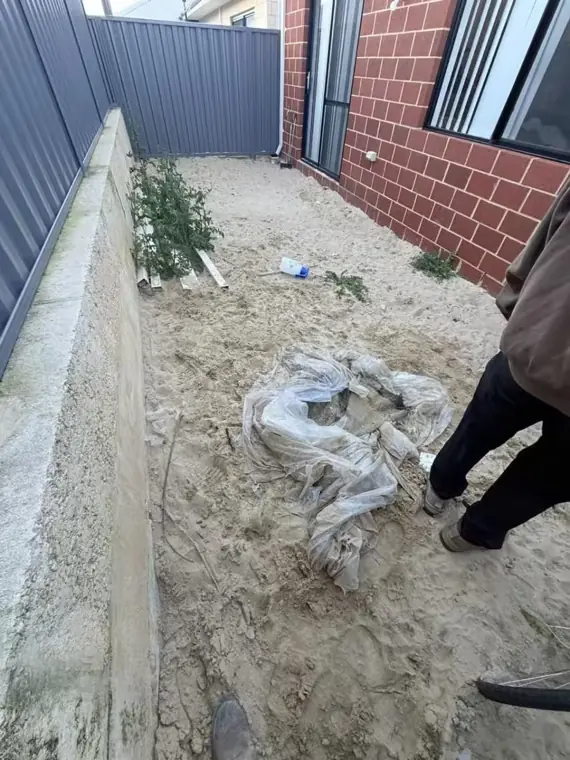
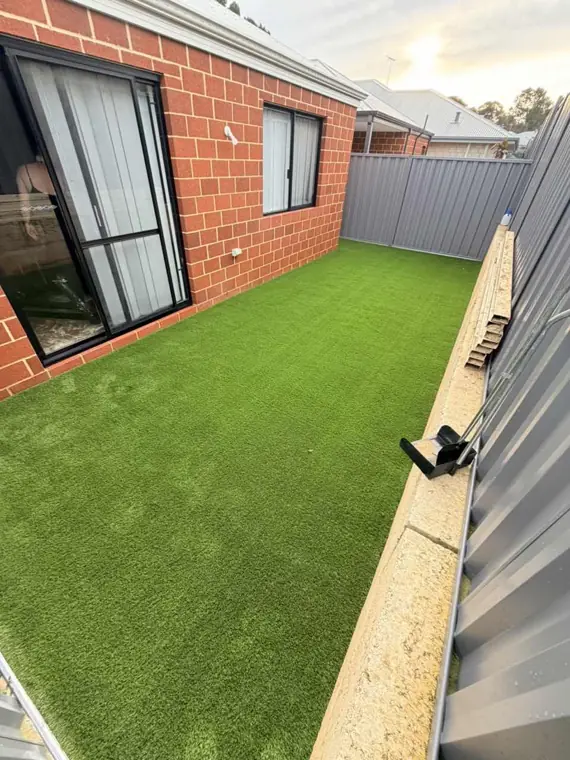
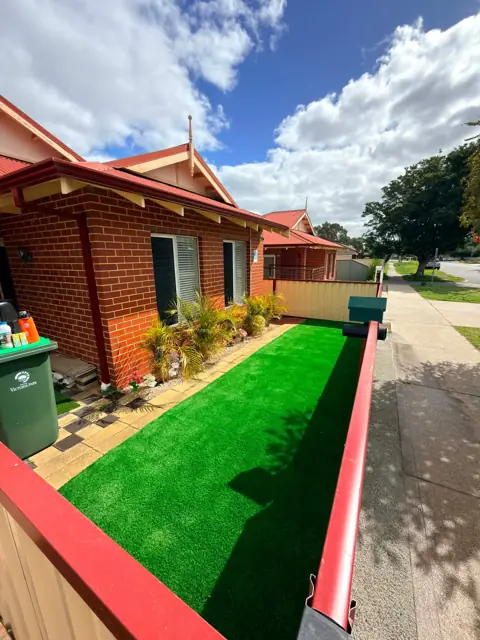
A rear courtyard with limestone-block retaining on one side and Colorbond on the other. The turf had to finish clean against both, and there is no middle distance in a yard this size to hide a poor line.


Artificial grass · Fremantle, WA
Our last four Fremantle jobs were 18, 20, 25 and 28 square metres. Not one of them was a back lawn — every one was a side run or a courtyard. In a space that size there is nowhere for a bad edge to hide, and that is what changes how synthetic turf gets laid here.
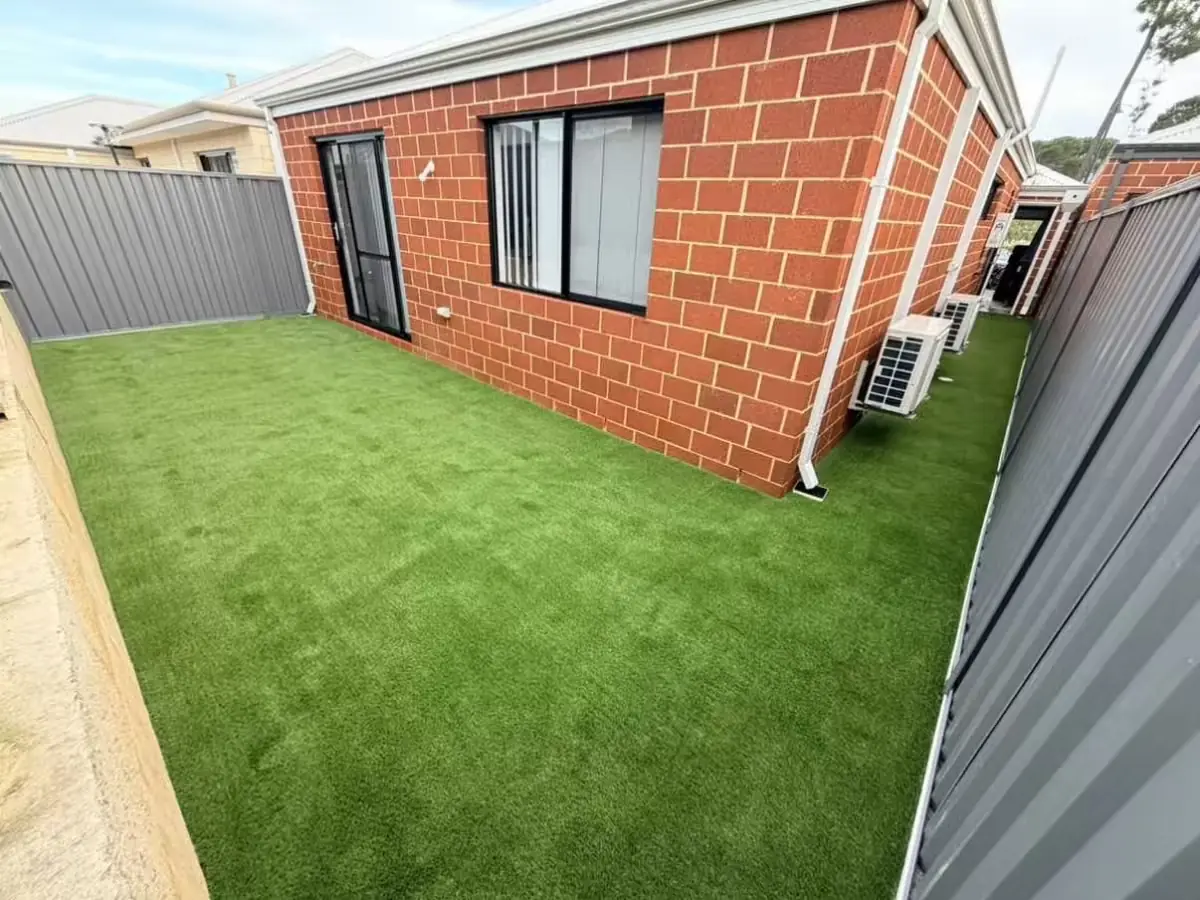
Fremantle · 25 m² · Coast 35
Why us here
We have been laying turf around Fremantle since 2014 — more than a hundred jobs — and the pattern here is consistent: the yards are small. Across our recent Fremantle work the average was 23 square metres, and at that size the perimeter is a bigger share of the work than the middle. Most of the day goes on edges. A joint you would never pick across a 200 m² lawn is the first thing you see in a courtyard.
Access is the other constraint. Several of these blocks have a side path barely wider than a wheelbarrow, so the roll gets cut down before it comes through and material is barrowed in by hand. It adds time rather than difficulty — we plan the cut list around the access, not the other way around.
And against brick, limestone and old paving we pin the perimeter rather than glue it. The edge stays tight, and no black line of adhesive appears along the wall two summers later. It also means the whole thing lifts back out without leaving anything on the stone.
The older stock
Away from the newer infill, a lot of Fremantle sits on limestone rather than deep sand. You cannot always dig to the depth you would inland, and there is no point fighting the rock for an extra 50 mm that changes nothing. The base build works with what is there: a shallower profile, compacted properly, with drainage handled at the edges instead of the bottom.
If your place is heritage listed, that is usually not an obstacle. Synthetic grass is a surface treatment, not a structure. We keep the build shallow and pin the perimeter instead of gluing to walls or paving, so it holds a tight edge against stone and comes back up years later without leaving adhesive on the brickwork. Tell us about the listing at the measure and we will work to its conditions.
The same thinking covers old brick paving, uneven stone steps and original kerbing. The turf finishes at the stone, not over it.

Recent work
A rear courtyard with limestone-block retaining on one side and Colorbond on the other. The turf had to finish clean against both, and there is no middle distance in a yard this size to hide a poor line.
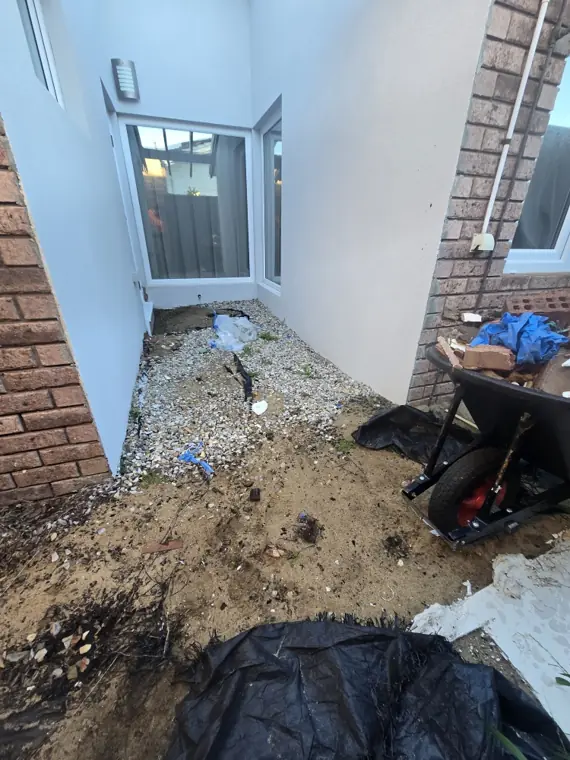
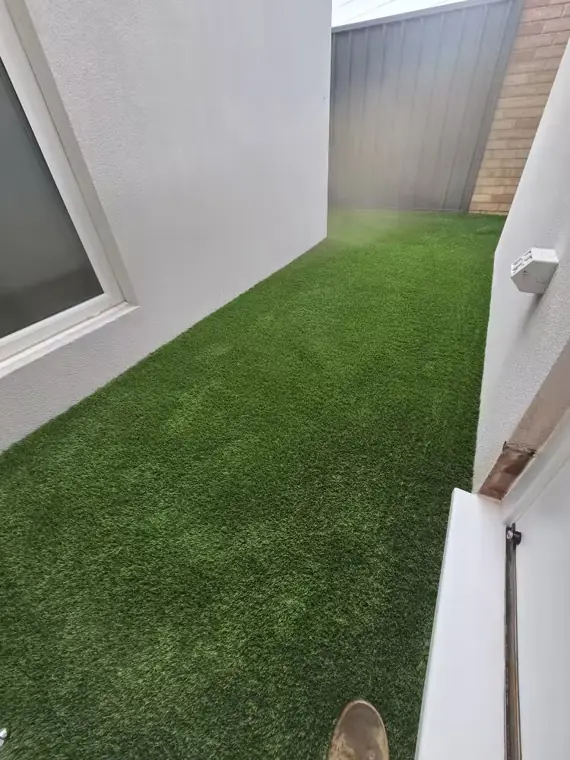
The narrowest of the four. Render on one wall, brick on the other, and a slot you can only barrow into one load at a time. The roll was cut to width before it came through the side gate.
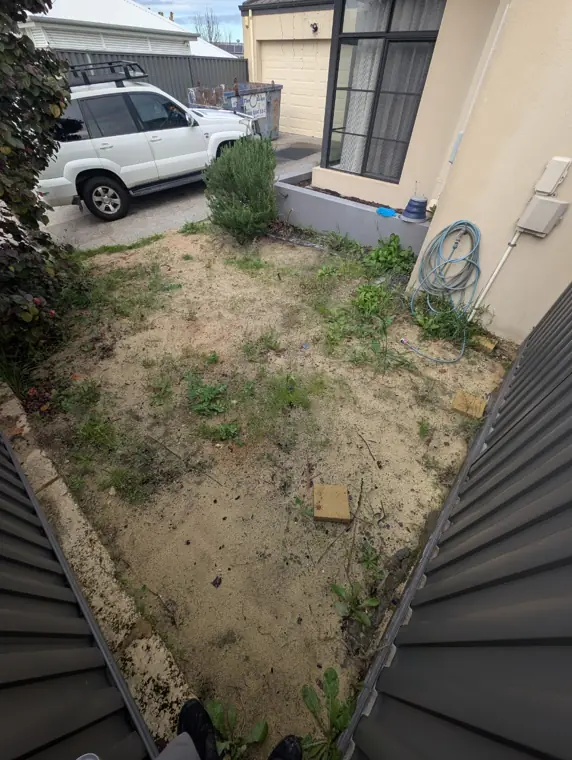
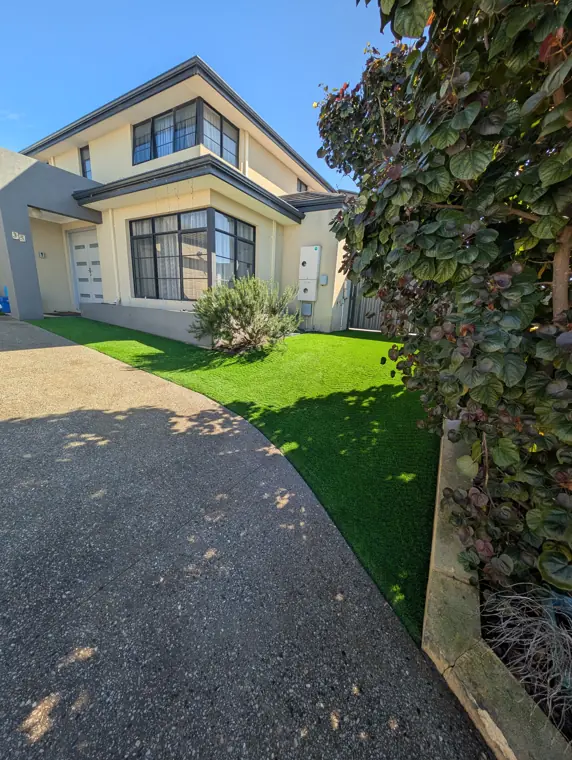
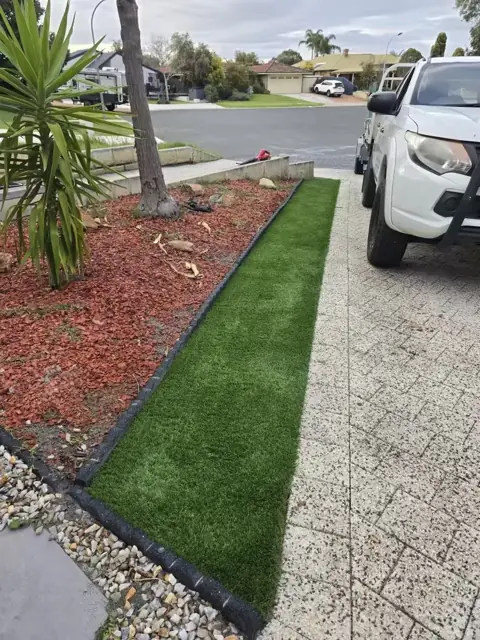
Side yard between the driveway and the house, running from patchy dead lawn to a clean strip edged against exposed aggregate.
The parts that decide it
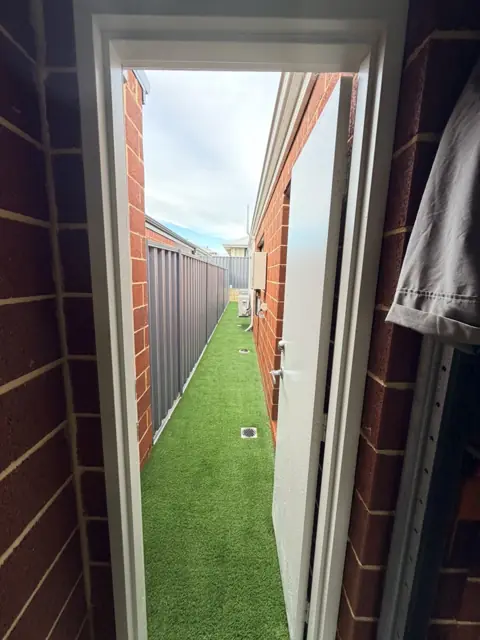
What actually went down here
No two of these yards wanted the same grass. Shade, salt, foot traffic and whatever the turf has to sit against all pull in different directions — which is why the samples come to you rather than the other way around.
A cooler-toned blade. It reads well against limestone and old brick instead of shouting green at it.
The everyday 35 mm. It holds up in shade, which most of these side runs are in for half the day.
From the family range. Softer underfoot for a strip that people actually walk on every day.
Tested through 48-hour seawater immersion with SGS and 24-hour chlorine exposure with Intertek. That is why it goes down near the coast and around pools.
Questions we get in this area
Yes. Three of our last four Fremantle jobs were side runs. Rolls are cut down before they come through and everything is barrowed in by hand. It adds time rather than difficulty, and we plan the cut list around the access rather than the other way around.
No. The yarn is UV-stabilised polyethylene and the backing is UV-stabilised polypropylene — neither corrodes. If you want the tested answer, Winter Green 40 has been through 48-hour seawater immersion with SGS. Coastal yards mostly just need a rinse now and then to clear salt and sand off the surface.
Usually not. Synthetic grass is a surface treatment rather than a structure. We keep the base build shallow and pin the perimeter instead of gluing to walls or paving, so it holds a tight edge against stone and comes back up years later without leaving adhesive on the brickwork. Tell us about the listing at the measure and we will work to its conditions.
Our last four Fremantle jobs averaged 23 square metres. Small is the normal job here, not the exception, and the on-site measure is free either way.
Supply only starts at $13 per square metre. Supplied and installed starts at $75 per square metre, and the final figure depends on the base build, the access and which of the twelve ranges you choose. We quote on site after measuring, not over the phone.