

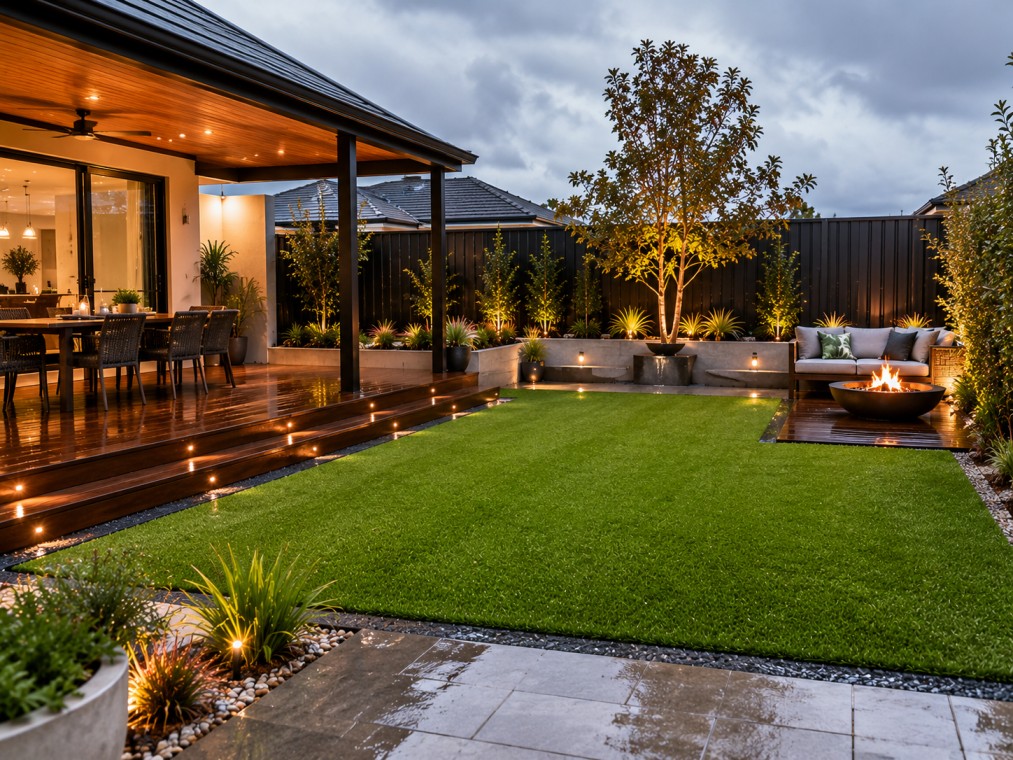
Perth homeowners often choose artificial grass because it’s low maintenance, water-efficient, and looks great year-round. However, while synthetic turf doesn’t require mowing or watering, it still benefits from seasonal care especially during winter.
Perth’s wet season brings increased rainfall, falling leaves, gum tree debris, and damp conditions that can affect the appearance of your lawn if left unchecked. The good news is that a few simple maintenance steps can keep your artificial grass looking clean, fresh, and performing properly throughout winter.
Whether you’re an existing artificial grass owner or considering a new installation, this guide will help you protect your investment during Perth’s wetter months.
Why Perth’s Wet Season Affects Artificial Grass
Unlike natural lawns, artificial grass won’t become muddy or develop bare patches after rain. However, winter conditions can still create maintenance challenges.
Common issues Perth homeowners experience include:
- Leaf and debris build-up
- Blocked drainage areas
- Flattened turf fibres
- Moss or algae growth in shaded areas
- Gum leaves and tree sap accumulation
Most of these problems are easy to prevent with regular care and proper installation.
1. Keep Leaves and Debris Under Control
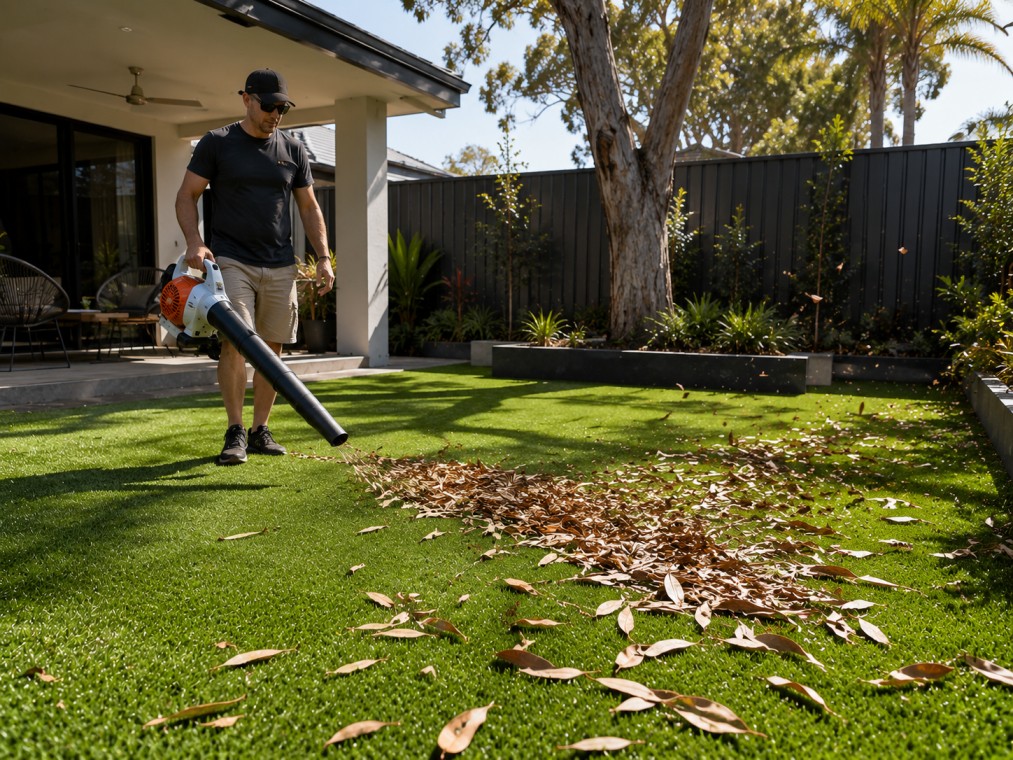
Winter storms and windy weather can quickly cover your lawn with leaves, twigs, and bark.
While a few leaves won’t cause damage, allowing debris to accumulate can:
- Block drainage
- Trap moisture
- Encourage moss growth
- Make your lawn appear untidy
Best Practice
Use a plastic leaf rake, soft broom, or leaf blower every few weeks during winter.
Properties with gum trees, jacarandas, or large native trees may require more frequent cleaning.
2. Prevent Moss and Algae Growth
Moss and algae are more likely to develop in:
- Shaded areas
- Damp corners
- Poorly ventilated spaces
While artificial grass itself doesn’t grow moss, organic matter trapped within the fibres can create conditions where moss begins to form.
How to Reduce Moss Build-Up
- Remove leaves regularly
- Improve airflow around the area
- Brush the turf periodically
- Address drainage problems promptly
Early prevention is much easier than treating established moss growth.
3. Remove Gum Tree Sap Quickly
Many Perth properties feature mature eucalyptus trees.
While they provide shade, they can also leave behind sticky sap and organic debris.
If sap is left on artificial grass for long periods, it can collect dirt and affect the appearance of the turf.
Cleaning Tip
For small areas, warm water and mild detergent are often sufficient.
Avoid harsh chemicals that could damage turf fibres.
4. Brush Your Turf to Maintain Appearance
Heavy rainfall, outdoor furniture, and foot traffic can flatten artificial grass fibres over time.
Regular brushing helps restore the lawn’s natural appearance and keeps fibres standing upright.
Benefits of Brushing
- Improves appearance
- Prevents matting
- Distributes infill evenly
- Extends turf lifespan
For most residential properties, brushing once every few months is usually enough.
High-traffic areas may benefit from more frequent maintenance.
5. Check Your Artificial Grass Drainage
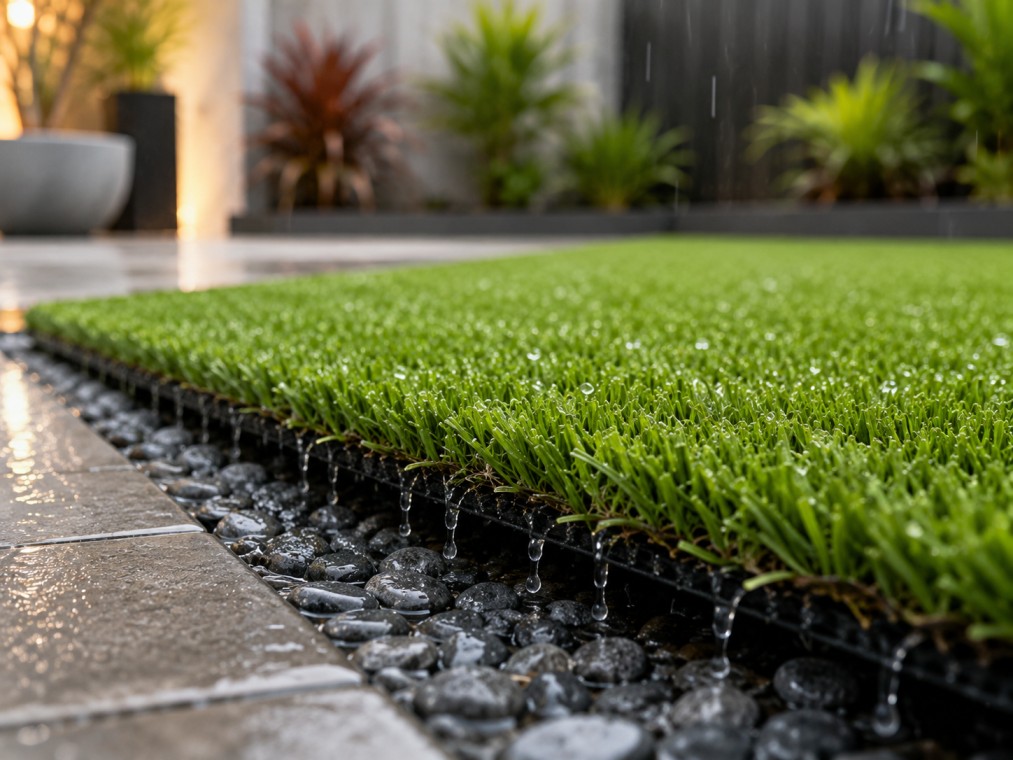
One of the biggest advantages of quality artificial grass is excellent drainage.
However, debris can sometimes block drainage pathways, especially after heavy rain.
Signs of Drainage Issues
- Water pooling on the surface
- Areas remaining wet long after rainfall
- Mud collecting around lawn edges
- Persistent damp patches
If your lawn drains correctly, rainwater should pass through quickly without leaving standing water.
This is one reason why professional artificial grass installation in Perth is so important. A properly prepared base and drainage system can prevent many common winter issues.
Why Quality Artificial Grass Performs Better in Winter
Not all synthetic turf products are the same.
Premium artificial grass is specifically designed to handle Australian weather conditions, including Perth’s wet winters and hot summers.
Higher-quality products typically feature:
- Superior drainage systems
- UV-resistant fibres
- Durable backing materials
- Better recovery after foot traffic
- Improved resistance to wear
Choosing quality materials from the start can significantly reduce long-term maintenance requirements.
When Should You Consider Professional Maintenance?
Most artificial grass maintenance can be handled by homeowners.
However, professional servicing may be worthwhile if you notice:
- Persistent drainage problems
- Significant moss build-up
- Compacted or flattened turf
- Heavy debris accumulation
- Older turf losing its appearance
A professional brush and maintenance service can often restore the look and performance of your lawn.
Winter Maintenance Checklist for Perth Homeowners
Use this simple checklist throughout winter:
- Remove leaves and debris regularly
- Inspect drainage after heavy rainfall
- Brush turf fibres every few months
- Remove gum tree sap promptly
- Monitor shaded areas for moss growth
- Schedule professional maintenance if needed
Following these steps can help keep your lawn looking fresh throughout Perth’s wet season.
Enjoy a Cleaner, Greener Lawn Year-Round
Artificial grass remains one of the most practical landscaping solutions for Perth homes. While winter conditions can create a few maintenance challenges, regular care will help preserve the appearance and performance of your lawn for years to come.
If you’re planning a new installation or looking to upgrade your outdoor space, Jay’s Synthetic Grass offers premium artificial grass solutions designed for Perth conditions.
Request a free quote today and discover the best artificial grass solutions for Perth homes.
FAQs
Yes. While artificial grass requires less maintenance than natural lawns, winter care helps prevent debris build-up, drainage issues, and moss growth.
Artificial grass itself doesn’t grow moss, but moss can develop on trapped organic matter in damp or shaded areas if regular cleaning is neglected.
Most Perth homeowners should remove leaves and debris every few weeks, especially after storms or periods of heavy rainfall.
Pooling water usually indicates blocked drainage, poor installation, or a problem with the underlying base.
Leaves won’t usually damage the turf, but excessive build-up can trap moisture and affect drainage performance.
High-quality artificial grass can last 10–20 years or more when properly installed and maintained.


